Showing posts with label Economics. Show all posts

Wednesday, March 25, 2015

The 'Share the Scraps' Economy


Robert Reich was Secretary of Labor in the Clinton Administration. He is an economist, who believes government and public policy should serve the broad interests of the American people.

Reich has become one of the most important voices opposing the sell out of our government to big corporations and the super rich.  This article focuses on the collapse of the middle class, driven by the loss of living wage jobs.   


______________________

Robert Reich: Why Work Is Turning Into a Nightmare


How would you like to live in an economy where robots do everything that can be predictably programmed in advance, and almost all profits go to the robots' owners?
Meanwhile, human beings do the work that's unpredictable - odd jobs, on-call projects, fetching and fixing, driving and delivering, tiny tasks needed at any and all hours - and patch together barely enough to live on.
Brace yourself. This is the economy we're now barreling toward.
They're Uber [3] drivers, Instacart [4] shoppers, and Airbnb [5] hosts. They include Taskrabbit [6] jobbers, Upcounsel [7]'s on-demand attorneys, and Healthtap [8]'s on-line doctors.
They're Mechanical Turks [9].
The euphemism is the "share" economy [10]. A more accurate term would be the "share-the-scraps" economy.
New software technologies are allowing almost any job to be divided up into discrete tasks that can be parceled out to workers when they're needed, with pay determined by demand for that particular job at that particular moment.
Customers and workers are matched online. Workers are rated on quality and reliability.
The big money goes to the corporations that own the software. The scraps go to the on-demand workers.
Consider Amazon's "Mechanical Turk." Amazon calls it "a marketplace for work that requires human intelligence [11]."
In reality, it's an Internet job board offering minimal pay for mindlessly-boring bite-sized chores. Computers can't do them because they require some minimal judgment, so human beings do them for peanuts -- say, writing a product description, for $3; or choosing the best of several photographs, for 30 cents; or deciphering handwriting, for 50 cents.
Amazon takes a healthy cut of every transaction.
This is the logical culmination of a process that began thirty years ago when corporations began turning over full-time jobs to temporary workers, independent contractors, free-lancers, and consultants.
It was a way to shift risks and uncertainties onto the workers - work that might entail more hours than planned for, or was more stressful than expected.
And a way to circumvent labor laws that set minimal standards for wages, hours, and working conditions. And that enabled employees to join together to bargain for better pay and benefits.
The new on-demand work shifts risks entirely onto workers, and eliminates minimal standards completely.
In effect, on-demand work is a reversion to the piece work of the nineteenth century - when workers had no power and no legal rights, took all the risks, and worked all hours for almost nothing.
Uber drivers [12] use their own cars, take out their own insurance, work as many hours as they want or can - and pay Uber a fat percent [13]. Worker safety? Social Security? Uber says it's not the employer so it's not responsible.
Amazon's Mechanical Turks work for pennies, literally. Minimum wage? Time-and-a half for overtime? Amazon says it just connects buyers and sellers so it's not responsible.
Defenders of on-demand work emphasize its flexibility. Workers can put in whatever time they want, work around their schedules, fill in the downtime in their calendars.
"People are monetizing their own downtime," says [14] Arun Sundararajan, a professor at New York University's business school.
But this argument confuses "downtime" with the time people normally reserve for the rest of their lives.
There are still only twenty-four hours in a day. When "downtime" is turned into work time, and that work time is unpredictable and low-paid, what happens to personal relationships? Family? One's own health?
Other proponents of on-demand work point to studies, such as one recently commissioned by Uber [15], showing Uber's on-demand workers to be "happy [15]."
But how many of them would be happier with a good-paying job offering regular hours?
An opportunity to make some extra bucks can seem mighty attractive in an economy whose median wage has been stagnant for thirty years and almost all of whose economic gains have been going to the top.
That doesn't make the opportunity a great deal. It only shows how bad a deal most working people have otherwise been getting.
Defenders also point out that as on-demand work continues to grow, on-demand workers are joining together in guild-like groups [16] to buy insurance and other benefits.
But, notably, they aren't using their bargaining power to get a larger share of the income they pull in, or steadier hours. That would be a union - something that Uber, Amazon, and other on-demand companies don't want.
Some economists laud on-demand work as a means of utilizing people moreefficiently [17].
But the biggest economic challenge we face isn't using people more efficiently. It's allocating work and the gains from work more decently.
On this measure, the share-the-scraps economy is hurtling us backwards.


Tuesday, January 13, 2015

My Message to the Billionaire Ruling Class


Hey, congratulations, rich guys. You’ve made more money than you could possibly ever spend. Most of you are content with that, but a few of you are not. Some of you, instead of using your money to do good deeds and champion genuine progress,  are way off in the opposite direction. By that I mean using your wealth and power to force your self-centered worldview on the rest of us.

The truth is most billionaires - in fact most people who have more than a million or two in assets - are not part of the political hardball being played by a small group of bankers, corporatists, and billionaire psychopaths who behave like greedy thugs.

Being rich is a wonderful thing for those who are grateful for their good fortune, and are willing to give high priority to the common good.  Wealth also offers those who are so blessed an opportunity to be leaders and heroes, who want a future for the Earth that is worthy of our species.

The Gates Foundation, in the name of Bill and Melinda Gates, and to a lesser extent Warren Buffet, has applied billions of dollars to some of the world’s most pressing problems.  But even Bill and Warren, with all the good that they do, are playing both ends against the middle.  Both are substantially invested in the continued massive consumption of coal and oil.  

Journalist Naomi Klein’s most recent book, This Changes Everything, exposes the dualistic thinking that certain high profile billionaires keep hidden behind their polished public images.  They may genuinely want clean skies and a healthy biosphere, but the record shows they are not willing to give up profitable revenue streams from investments that foster our continued dependence on dirty fossil energy.

Too many wealthy people are content to sit on the political sidelines and collect their fat profits, while the economic and culturally corrosive public policy promoted by the worst of their billionaire neighbors makes everybody that already has big money even more rich, even more separate and unequal from the rest of us.

In fact, the real political evil emerges from a very small number of wealthy people.   Almost all the worst offenders are old.  Almost all are politically conservative men, who very much believe in white power and privilege. They aggressively use their wealth and influence to buy politicians and manipulate the American political process, with the intent to maximize their personal interests. I don’t suppose there is much of anything that I or anyone else could say that could turn that small band of big money evildoers in a more benevolent direction. They are simply indifferent to the consequences of their pathological actions.

But there is hope for the vast majority of millionaires and billionaires, who are not hopelessly self-absorbed.  Here’s my message to those wealthy folks, who recognize that they are not immune to the consequences of all the unprecedented, deeply unsettling, global scale challenges humanity must deal with.  I’m talking about climate change and fossil fuel dependence. I’m talking about our reckless, abjectly corrupt, and massively dysfunctional political process.  I’m talking about the human-driven shredding of the biosphere, whose finite water and living resources are being overwhelmed by the demands of seven billion plus human beings. We have made an Earth-sized mess of things.  Humanity and nature are near a breaking point of unprecedented scale.  Every human being has an obligation to get serious about this. Whether you’re a billionaire or an indigenous person, terrified and brutalized by illegal loggers in your forest, you have a life-and-death stake in what happens to this planet. 

To all fundamentally good and decent Americans who happen to be rich, and also happen to be passive or indifferent to our broken political process, I say, time to wake up.  You might think you can escape the consequences of your inaction. Don’t count on it.   History has shown that when the privileged members of a society stand by passively and watch the masses sink, the rabble tend to rise up. They focus their rage and demands for retribution on people of privilege, reserving their greatest ire for those who have shown no compassion for their suffering.  I’m not just talking about the oppressors. I’m talking about those who turned a blind eye to the process of oppression.

In 1794, during the French Revolution, Antoine Lavoiser, who is remembered historically for his contributions to science, was guillotined because he made his living as a tax collector for the ruling class.  The same dynamic that resulted in Lavosier losing his head applies today. Being on the losing side of a life and death, cultural struggle can be a fatal mistake.

Getting on the morally correct, and very likely, the winning side of history, requires making yourself part of the solution.  It is not acceptable to sit by passively while a handful of bad billionaires use their wealth to ruin our environment and tear society apart in the name of profit. End of story.


Saturday, November 15, 2014

Top 0.1 Percent Has More Wealth Than Bottom 90 Percent


This post comes from an article on the Mother Jones  blog by Inae Oh.

It's a reflection of what is fundamentally wrong in America.  Less than 160,000 families have more money than the other 316 million of us combined.    Stunning, shameful, incredibly corrosive to our economy and our democracy:.. those are some words I would choose to describe this circumstance.

Economics is pretty simple at its most basic.  Markets are a place where sellers come to deal with people who have the need to buy at least the necessities among all those things for sale. But, when the vast majority of people are no longer able to participate in that marketplace, because they have almost nothing to exchange for even basic needs like  food, shelter, and healthcare; when that happens,  the entire idea of a marketplace is undermined.    Sad to say, that is exactly what is wrong with America's today.  In effect, our economy is trapped in a malaise caused a tiny fraction of us owning all the wealth. 

All of the political power in America has fallen into the hands of big bankers, bloated corporations, and the super-rich.  Until that changes,  nine out of ten of us will continue to get the very short end of the stick.
_________________

From Inae Oh's Mother Jones blog piece...

While a complex web of factors have contributed to the rise in income inequality in America, a new research paper says most of the blame can be largely placed in the immense growth experienced by the top tenth of the richest 1 percent of Americans in recent years. From the report:

The rise of wealth inequality is almost entirely due to the rise of the top 0.1% wealth share, from 7% in 1979 to 22% in 2012, a level almost as high as in 1929. The bottom 90% wealth share first increased up to the mid-1980s and then steadily declined. The increase in wealth concentration is due to the surge of top incomes combined with an increase in saving rate inequality.
So, who are the 0.1 percent among us? According to Emmanuel Saez and Gabriel Zucman, the paper's researchers, the elite group is a small one, roughly composed of 160,000 families with assets exceeding $20 million, but their grip on America's wealth distribution is about to surpass the bottom 90 percent for the first time in more than half a century.  Today's 0.1 percent also tend to be younger than the top incomers of the 1960's, despite the fact the country as a whole has been living longer—proving once again, that there has truly never been a more opportune time to be rich in America:


Wednesday, October 29, 2014

Solar Energy Poised for Massive Expansion


So, the evidence of the obsolescence of coal, oil, and natural gas energy is emerging rapidly.  The article below just appeared in Bloomberg news.  The cost of solar has dropped so much, that it is about to become cheaper than coal, oil, or natural gas in nearly every U.S. state.  Very exciting news.

One caveat. U.S. energy policy is still controlled by the fossil energy giants.  They are not about to have their hydrocarbon reserves turned into stranded assets... not without a fight.  They are already waging an aggressive campaign to deny climate change and to undermine clean, renewable energy technologies like wind and solar. They will impede progress as long as they can.

At the end of the day, it will  be up  to American voters to elect politicians who will create a new nationwide energy policy that will allow us to fully realize a transition to clean, renewable, low cost energy. 


__________________________

While You Were Getting Worked Up Over Oil Prices, This Just Happened to Solar


Every time fossil fuels get cheaper, people lose interest in solar deployment. That may be about to change.

After years of struggling against cheap natural gas prices and variable subsidies, solar electricity is on track to be as cheap or cheaper than average electricity-bill prices in 47 U.S. states -- in 2016, according to a Deutsche Bank report published this week. That’s assuming the U.S. maintains its 30 percent tax credit on system costs, which is set to expire that same year.

Even if the tax credit drops to 10 percent, solar will soon reach price parity with conventional electricity in well over half the nation: 36 states. Gone are the days when solar panels were an exotic plaything of Earth-loving rich people. Solar is becoming mainstream, and prices will continue to drop as the technology improves and financing becomes more affordable, according to the report.


Grid Parity to Reach 36 States in 2016

Solar has already reached grid parity in 10 states that are responsible for 90 percent of U.S. solar electricity production. In those states alone, installed capacity growth will increase as much as sixfold over the next three to four years, Deutsche Bank analyst Vishal Shaw wrote in the Oct. 26 report.
The reason solar-power generation will increasingly dominate: it’s a technology, not a fuel. As such, efficiency increases and prices fall as time goes on. The price of Earth’s limited fossil fuels tends to go the other direction. Michael Park, an analyst at Sanford Bernstein, has a term for the staggering price relationship between solar and fossil fuels: the Terrordome. I’m not sure exactly what that means, but it doesn’t sound very forgiving.

 Solar will be the world’s biggest single source of energy by 2050, according to a recent estimate by the International Energy Agency. Currently, it’s responsible for just a fraction of one percent.
Because of solar's small market share today, no matter how quickly capacity expands, it won’t have much immediate impact on the price of other forms of energy. But soon, for the first time, the reverse may also be true: Gas and coal prices will lose their sway over the solar industry


Sunday, October 5, 2014

This Changes Everything


About two weeks ago, best-selling author, Naomi Klein's new book, This Change Everything was released by Simon and Schuster.  It debuted at #5 on the New York Times Bestseller List.

I've been a fan of Naomi Klein for a long time. I read her first book, No Logo, when it came out about 20 years ago.  Then, her book The Shock Doctrine was released in 2007.  In a nutshell, it focused on the predatory, morally bankrupt nature of neoconservative economics; the brand of capitalism that's dominated since the days of Ronald Reagan.   I wrote a review of that book about two years ago. The link is http://ecstatictruthpdx.blogspot.com/2012/04/shock-doctrine.html  

I just finished reading This Changes Everything.  In it, Naomi Klein makes a powerful case that we are at the end of our rope with climate change.  If we continue, business as usual, running our world on oil, coal, and natural gas, the catastrophic consequences will be unprecedented in all of human history.


Klein shows that big coal and oil and the banks that underwrite them are the most lucrative businesses in all of history. Moreover, the billions in profits these corporate giants generate have allowed them to control the media  and manipulate our political system to get the tax and regulatory policy they want, no matter the consequences.

The primary cause of air pollution is the burning of fossil fuels    That pollution has caused a warming of the Earth's atmosphere that is already driving profound changes to our environment, including the melting of Earth's icecaps and glaciers, rising sea levels, and a large increase in highly destructive weather extremes.  In order to achieve anything close to a soft landing for humanity, scientists say that atmospheric temperature rise must be limited to two degrees Celsius. To do that,  we need to limit the additional carbon air pollution to 500 gigatons.  The problem is, as Klein points out,  fossil energy producers claim to have nearly 3,000 gigatons of  carbon in found, yet to be extracted, reserves of coal, oil, and gas.  That amounts to trillions of dollars in potential profits to energy companies that are only interested in generating income for their stakeholders. As Klein puts it, "...they're determined to burn five times more fossil fuel than the planet's atmosphere can begin to absorb.'

Here's another very unsettling nugget from Klein..."In 2013, in the United States alone, the oil and gas industry spent just under $400,000 a day lobbying Congress and government officials."

So, it's clear, big fossil energy is not about to back down and forgo trillions in profit. It's also clear, if they are allowed to have their way and burn all the dirty energy they claim to have, waiting and ready to dig up, the consequences for life on Earth will be disastrous to the extreme.

As Klein points out, we have the technologies to end our dependence on fossil forms of energy and revitalize human society with a transition to a whole range of proven, clean energy technologies. To some extent,  it's already happening.  

Wall Street and the big energy players are not about to let their largess of carbon to become stranded assets. They are using their money and influence to aggressively resist any threat to their political dominance and their obscene profits.

Blunting the power of corporations requires a fundamental change to our economic system, and to do that we must first remake our political system to remove the undue money and influence.  That's a tall order.  Klein believes only an unprecedented grassroots effort can prevail.  She presents ample evidence that just such an effort is possible, though the window for massive action is closing.

Naomi Klein's worldview is entirely compatible with my own. I think she is one of the most important voices for reason and positive change in public life.

I bought This Changes Everything at Powell's Bookstore in Beaverton the day after it was released. I then learned that on Wednesday, October 1st,  Naomi Klein was scheduled to appear at that same bookstore.   Of course, I was determined to get my copies of This Changes Everything and The Shock Doctrine signed.  Then, I had an inspiration and what happened subsequently was much more than just getting the author's autograph.  Stayed tuned, for my follow-up blog entry on Naomi Klein and This Changes Everything.

Oh, and for the record, This Changes Everything gets my highest recommendation. 

Thursday, April 24, 2014

The Zero Marginal Cost Society


The sub-title of Jeremy Rifkin's latest book is The Internet of Things, the Collaborative Commons, and the Collapse of Capitalism. Provocative to say the least.  This new book is a logical and worthy successor to Rifkin's last, which was titled, The Third Industrial Revolution. Rifkin has become something of a world class guru on the clean energy revolution that is well underway.  It's about fossil fuels and a market driven economy giving way to a world powered by clean, inexhaustible renewable energy resources like solar, wind, and hydropower.


In The Zero Marginal Cost Society, Rifkin sees industrial capitalism and materialism as giving way to an era that is far more inclusive, empathetic, and sustainable;  a new age in which the cost of goods and services are driven down to near zero by technological innovation and the very market forces that have shaped the world that we know. The millennials, the first generation raised in this new era, are less interested in the accumulation of property and possessions, and far more interested in seeing the world as a collection of commons - like the air, the water, and the biosphere -  that we all depend on and all have a collaborative stake in nurturing.

Many of those that have gotten rich as the facilitators and minions of market capitalism are often quick to dismiss Rifkin's suggestion that they are on their way to being marginalized. But the case he makes is exceedingly compelling.  The profound, global scale changes underway are built on the information internet, the emerging internet of energy, and the just developing internet of things.

Rifkin's credentials are formidable. His more than 20 books have been translated into 35 languages. He has been an advisor to the European Union for more than a decade and has had a significant influence on Europe's adoption of his 'Third Industrial Revolution' vision.

I find the transition Rifkin sees as already underway as reason for hope. Rifkin believes that humanity can weather the storm we have created for ourselves with regard to fossil energy dependence and climate, egregious human overpopulation, resource scarcity and conflict that arises from it, and the perversion of governance by a small number of super rich sociopaths, who use their wealth to prevent change that is contrary to their own personal interests.  The latter, to me, is the biggest threat to Rifkin's positive vision. An example of this: the Koch Brothers, two pathological siblings, who are worth $100 billion between them.  They and their ilk are determined to use their money to pervert history and stand in the way of the kind of change that is critically needed in our world.  The Kochs - who own a massive part of Canada's tar sands -  are heavily involved in fostering climate skepticism and bolstering the Republican party, which has become an almost entirely obstructionist force in American politics.

If the reassuring vision that Jeremy Rifkin illuminates so persuasively in The Zero Marginal Cost Society is to be fully realized,  the ability of the super rich to use their money to derail the transition to a post-market, collaborative future will need to be blunted.   Here again, as I have written in so many of these blog pieces, we have to look at a Constitutional Amendment to turn back the sell out of citizen rights driven by recent decisions of the Supreme Court. The five conservative judges on the Roberts court have opened the floodgates to political influence spending by the Koch Brothers and their super rich friends.  Two decisions,  Citizens United and more recently, McCutcheon vs. FEC
assured that 'he who has the money makes the rules'.

I am inspired by the trends Jeremy Rifkin has identified. As a means of protecting the biosphere, I want to see his hopeful vision  fully blossom.  That is why I  choose to support Move to Amend, an activist organization that is focused on achieving a Constitutional Amendment that says Corporations are not people and money is not speech.  That kind of change would neutralize the ability of big corporate money and the super rich to distort our political process.  If you aren't already on board with this, I urge you to educate yourself then get with the program and be part of the solution.

Jeremy Rifkin's book gives  us reason to hope for a better future. Read The Zero Marginal Cost Society,  then stand with Move to Amend, and do your part to help make it happen.

Here is a link to the webpage for The Zero Marginal Cost Society     http://www.thezeromarginalcostsociety.com/  


Here is a link to a one hour presentation Jeremy Rifkin made on his latest book to the leaders of Google... https://www.youtube.com/watch?v=5-iDUcETjvo&feature=youtu.be


Saturday, February 1, 2014

The Crash of 2016


Thom Hartmann's new book, The Crash of 2016 offers evidence and historical context for yet another economic collapse of our society. What happened in 2008 is about to happen again, only this time, it will be much worse.  That's the unambiguous conclusion of The Crash of 2016.  


I have read many of Hartmann's books. His worldview is built on solid research. In a nutshell, as he sees it, human civilization is on the precipice. Too many people, too few resources, and a  political system that is corrupt to the core.  What Hartmann calls Economic royalists have brought America to its knees before. In fact, there's a pattern. Hartmann's calls it the great forgetting, where every fourth generation removed from an economic meltdown caused by the hubris of corporations, banksters, and individuals exercising unrestrained self-interest, it happens again. In 1929, the world fell into a great depression, driven largely by the excessive gaming of the economic system by the rich.  In response, the people elected Franklin Roosevelt. As President, he launched a recovery with his progressive 'New Deal' ideas. Then World War Two came. In it's aftermath, America and the rest of the world moved into an extended period of economic growth and broadly realized prosperity.  Then, in 1980, Ronald Reagan was elected President. He and his neo-conservative cabal cut taxes on the rich and launched an era of deregulation that set us on an inevitable course for another collapse.  The American middle class has been eviscerated by conservative, 'supply-side' economic policy.  The first reckoning came with the 2008 economic meltdown. Unfortunately, the response was entirely inadequate. The neo-conservatives who caused the meltdown were not held accountable.  Because of inadequate policy reforms, the recovery from 2008 has been tepid at best.   Now, as Thom Hartmann so effectively points out, we are headed toward another collapse. This one will be much more severe than what happened in 2008.  Hartmann makes a very strong case for another economic breakdown in 2016, give or take a year or two.

So, what do we do?  First, we brace for what appears to be inevitable; another collapse of our economic system.  As before, there will be a lot of finger pointing. The neo-conservatives will blame everyone but themselves. We will have a choice.  We can stay the course and allow corporations, the banksters, and the rich to run roughshod over what's left of our civilization, or we can elect leaders who will choose a progressive course and make much-needed reforms to our system of governance...reforms that will restore 'of, by, and for the people' to our way of life.

Thom Hartmann's The Crash of 2016 delivers  a clear prescription for what we as citizens must do to rebuild from the ashes of the crash that's coming. His vision offers hope for a new order that is both life-affirming and sustainable over the long term.

Highest recommendation.


Here is a link to Thom Hartmann's website and radio show...  http://www.thomhartmann.com/


Tuesday, January 28, 2014

Wealth Inequality in America


My friend and colleague Bill Hoagland sent me the link to this video.  It's focus is the extraordinary wealth inequality in America. The top one percent on the wealth spectrum has more than the bottom forty percent of the people combined.  The whole sordid picture of wealth distribution is presented very effectively in a short video produced by a group called, Think Reality.

Here is the link to the video...http://www.youtube.com/watch?v=QPKKQnijnsM


Sunday, January 12, 2014

DOE's EIA - Thoroughly Wrong on Clean Energy


What follows is a piece that I am reposting from CleanTechnica, one of the energy blogs I follow. If you want honest and up-to-date reporting on what's happening in energy, particularly clean energy, this is a blog you should be reading.

The Energy Information Agency (EIA) is part of the US Department of Energy. The EIA is tasked with turning energy data into reports and projections on the energy industry.  Unfortunately, EIA appears to be populated with insiders from the traditional fossil fuel and nuclear energy industries. They are adept at employing corrupt assumptions to draw indefensible conclusions. The energy forecasts they have put forward are wildly off base; thoroughly corrupted by a biased approach that favors the old ways over the new to a ridiculous degree. Read what follows. You will surely come to the same conclusion.

________________________________


The following is an open letter a few CleanTechnica readers wrote, after discussing recent EIA forecasts down in the comments section. As you’ll see, it’s in response to some absurd forecasts regarding US renewable energy adoption. Here’s one highlight:
it was forecast that we would reach 0.45 GW of Solar PV on the grid by 2035, in November 2013 we reached 7.11 GW according to the FERC.
Surely, in making new predictions it would be appropriate for the EIA to address how their models could produce a 25 year forecast which has already been surpassed 16 times over in less than 3 years.
Anyway, below is the letter, followed by some renewable energy charts I’m adding and some additional commentary.

To Dr. Ernest Moniz,  US Secretary of Energy

Dear Secretary Moniz

We are a group of concerned individuals with an interest in the future of our energy supply. We are aware of the importance of accurate data and forecasts in order to understand energy trends and shape future energy policy. After reading the recently released EIA Annual Energy Outlook 2014, we found it contains a number of forecasts which concern and surprise us.
 
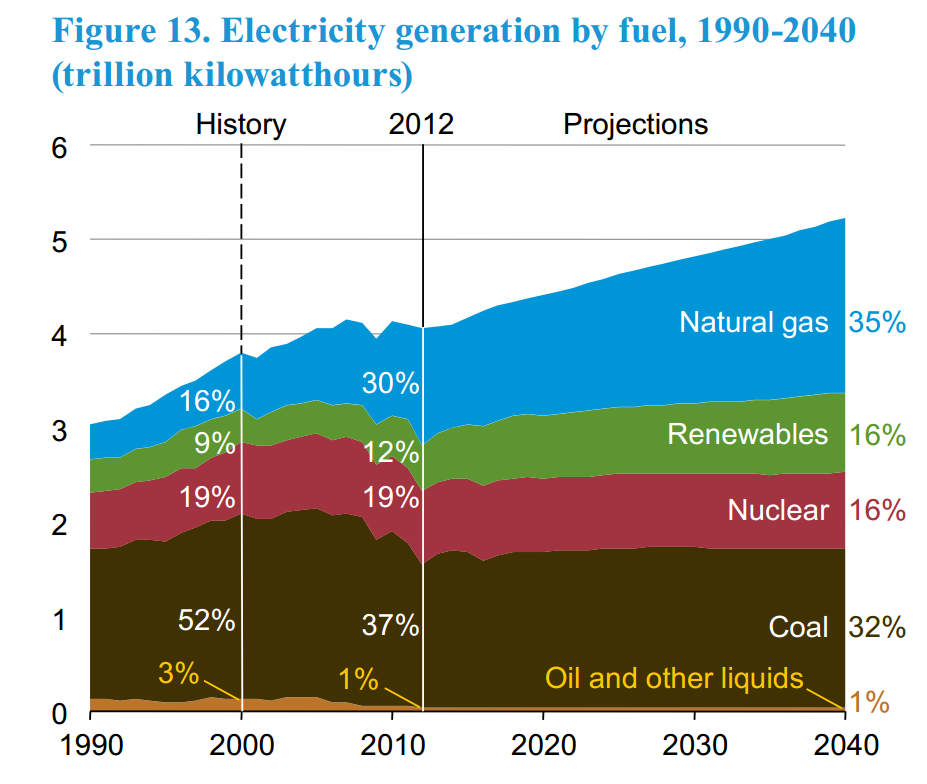
Here is the Figure outlining the long term forecast under the AEO 2014 reference case for US grid power:


We were surprised to see that the DOE/EIA expects renewables to gain only a further 4% share of total electricity generation and reach only 16% of the total by 2040. That suggests an average annual increase of ~0.1% of the total demand annually by all renewables.
 
Consider that wind alone moved from 3.5% to over 4.5% of the total US electricity supply this last year according to EIA EPM data. Over 1% in one year from one technology. Solar is similarly starting to see accelerated installation rates, albeit from a lower base.
 
Considering that coal plant construction has slowed to a crawl with a paucity of projects in a long development pipeline, nuclear plant construction is sparse, and existing coal and nuclear plants closures are accelerating, it’s hard to see how they maintain such large shares and renewables gain so little.
 
When we look at the EIA predictions for individual non-hydro renewables it becomes clear how the low combined forecast arose. Note that none of these components or the forecasts made about them have been mentioned in any way in the discussion of the report. One has to delve deep into the interactive data browser to discover any of this.
 
AEO 2014 forecasts for individual non-hydro renewable technologies;
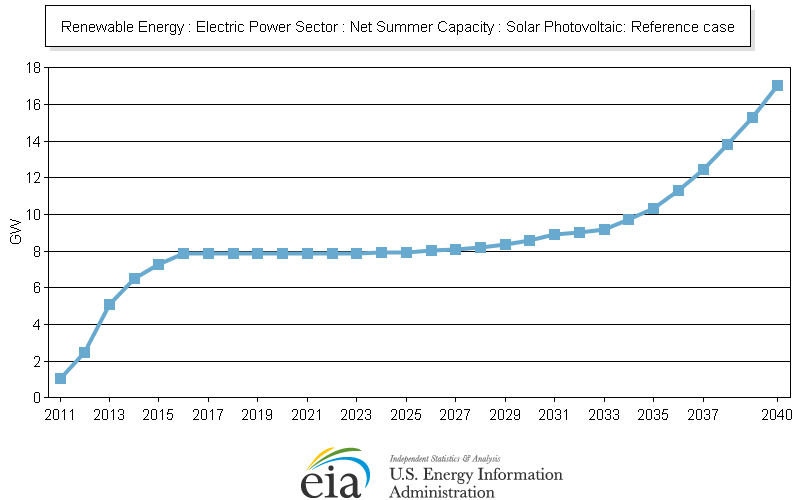
PV Solar installations stop in 2016 and do not resume for 12 years and even then at a rate significantly below current rates.
 

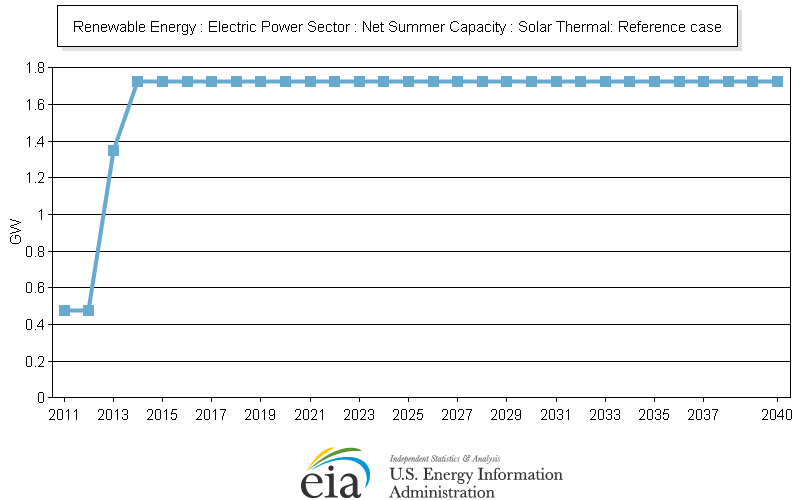
No thermal solar is constructed past 2014.


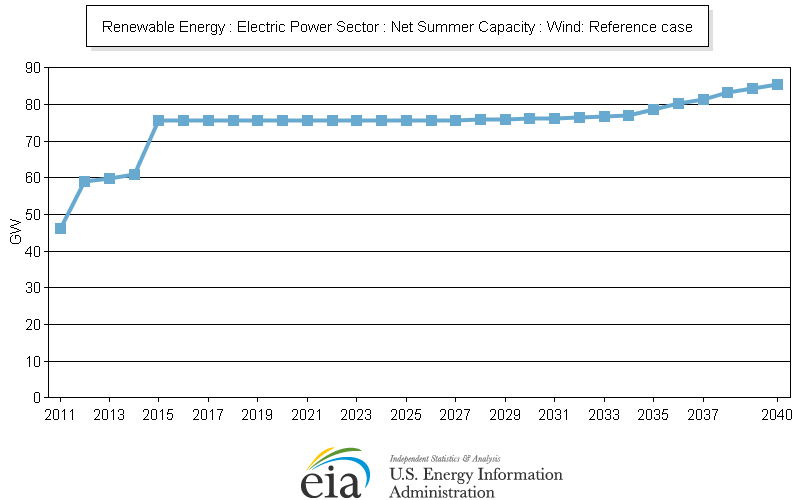
Construction of wind farms ceases in 2016 and does not resume for almost 20 years.
 

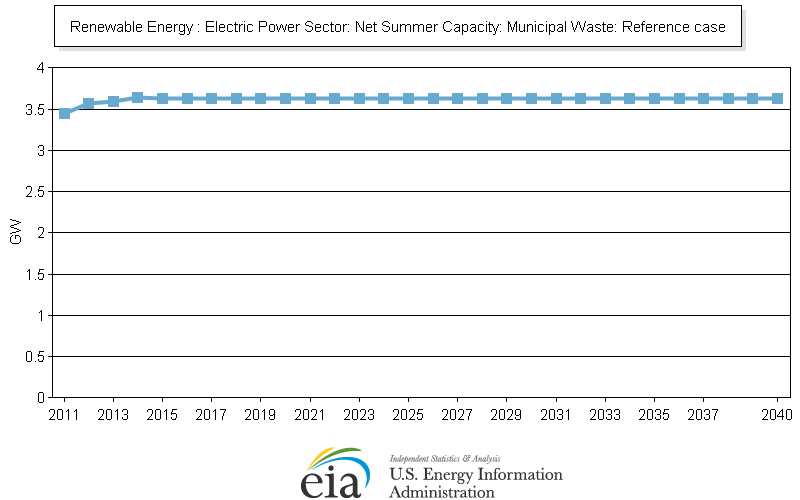
Municipal waste generation capacity additions grind to a halt in two years, never to occur again.
 

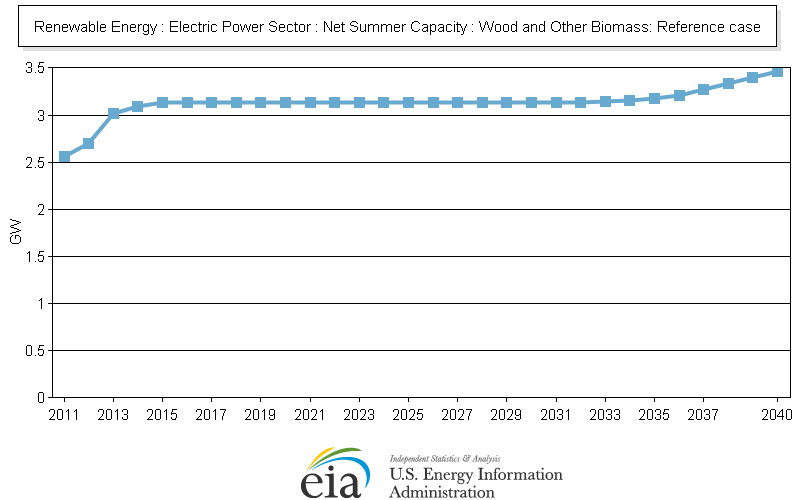
Wood and biomass suffer a similar fate.
 
 
We find it highly unusual that 5 statistical models using 5 data samples regarding 5 different energy technologies at varying levels of economic and technological maturity could produce such strikingly similar results. The implication is that the EIA’s official position is that all the major non-hydro grid-scale renewables will see 1-2 further years of capacity growth followed by 15-27 years of no further installations.
 
To provide further context on one of these technologies and the forecast for its future in the report, we know from the FERC Energy Infrastructure Reports that 2.63 GW of utility-scale Solar PV has been added to the US grid in the first 11 months of 2013. The AEO 2014 would have us believe that over the next 27 years only a further 10 GW will be added, an average of only 0.37GW per year, including a 12-year hiatus from 2015 to 2027 where no solar PV whatsoever is added.
 
Surely, if the EIA stands by these forecasts of dramatic and sudden deviations from accelerating trends in grid-scale renewable installations, they would warrant graphical publication in the report with an accompanying discussion justifying them?

At present, they are essentially hidden, hard to find for even those with a keen interest in the subject.
We also feel that the EIA has made thousands of forecasts in the past which never seem to be publicly visited again, for example in the 2010 AEO it was forecast that we would reach 0.45 GW of solar PV on the grid by 2035, in November 2013 we reached 7.11 GW according to the FERC.
Surely, in making new predictions it would be appropriate for the EIA to address how their models could produce a 25 year forecast which has already been surpassed 16 times over in less than 3 years. What changes have been made to the models to improve this terrible forecasting record? If none, then should the renewable forecasts come with a disclaimer that they are highly unreliable and have a history of massive underestimation of renewable growth, surely burying them deep in the data of the report is not an appropriate strategy.
 
Do the EIA and the DOE really stand by this report and its predictions as quality forecasts with a high probability of accurately representing future trends? We find it overwhelmingly unlikely that solar PV will soon simply stop being installed for 12 years given recent dramatic price decreases and acceleration of installations, yet the EIA report will allow a congress member to stand up and ask why the government is supporting a technology that is so uneconomical that the EIA believes it will be 12 years before any further installations will occur. We feel the other technologies we have mentioned are similarly highly pessimistically represented by this report.
 
We ask you to review these forecasts and question whether the DOE stands by them or whether they require significant review and revision before being fit for public release as the official forecast of the DOE.
 
Sincerely,
 
Dennis Heidner, Bob Wallace, and RobS
 
US solar power growth
 
 
US wind power growth
 
 
DOE_Solar_Deployment


DOE_Wind_Deployment

That doesn’t look like it’s going to flatline, does it?

Addendum/Update following some discussion with experts on Twitter: So, what is the underlying issue with the EIA’s forecasts? The key issues are the assumptions. One of the most important assumptions is that they don’t include any changes in policy going forward. (Meaning, policies in place today remain in place until they expire… and then no new policies are added.) So, fossil fuels and nuclear keep their subsidies (which are written into the tax code and don’t expire), but renewables lose theirs within a couple of years or so and then never regain them again, and never get any policy support again. This results in pretty good base forecasts off of which other forecasts based on different policy scenarios can be built, using a variety of different policy assumptions, but it also means that no responsible person or media outlet should treat the base EIA forecast as being anything close to what will happen in reality.

Furthermore, beyond the no-policy-change assumptions, the EIA uses a number of rather questionable cost and integration assumptions. These assumptions negatively impact the renewable energy forecasts. But that’s obviously a more complicated matter for a separate, longer discussion.
In the end, the biggest issue seems to be this: the mass media often reports on and references these EIA forecasts as if they are actual forecasts for what will occur in the future. This results in massive misinformation spreading far and wide. Part of the blame is certainly on the mass media, but part of the blame is also on the EIA for not being very clear about this when presenting its “forecasts” and sharing them with the public and media. For example, in the executive summary of the early release of the Annual Energy Outlook 2014, it is written that the projections are made “under the assumption that current laws and regulations remain generally unchanged throughout the projection period.” That can easily be read as saying that, when the laws expire, the EIA is assuming that the laws are renewed and continue as they are set today. But it actually means that there will be no laws renewed and no new laws supporting renewable energy development will be enacted, which is completely unlikely to happen. A member of the mass media could very easily misunderstand that line… if they look at it at all. 

And, again, there are a number of other technical assumptions that are very questionable and counter to renewables.

The end point: don’t treat the EIA’s Annual Energy Outlook base case projections as actual, realistic projections. They are primarily useful for forecasters as building blocks for their own more realistic forecasts.

Read more at http://cleantechnica.com/2014/01/10/horrible-eia-forecasts-letter-cleantechnica-readers/#2PuJphLy8zoygD5O.99

Friday, January 3, 2014

Money as Speech - The Musical


When one closely examines the global scale challenges we face as a human culture,  we must depend on governance to address these issues.  After all, our governments are supposed to be looking out for our interests, right?    Very often,  way too often, that is not happening.  Instead,  the governance process has been coopted for the benefit of a handful of  elites, who use their wealth and power to manipulate public policy for their own narrow interests.

ProPublica's new music video tells that story in very entertaining fashion.

Here is a link to Pro Publica's very provocative and engaging  video...  http://www.youtube.com/watch?v=3d-bYU2cZ48


Saturday, November 30, 2013

The War on Thanksgiving


In recent years, the arrival of the holiday season has brought with it a chorus of right-wing lunacy about a so-called 'war on Christmas'.  Their proof for this vacuous bloat of blarney: people these days are ever more prone to greet each other with a 'Happy Holidays' instead of 'Merry Christmas'.  Well, jeeze, what a terrible thing.  Conservative extremists take this as an affront to Christianity.  In reality, this change of greeting seems to be much more about acknowledging that there are other religious traditions celebrating at this time of year - Chanukah for instance.  'Happy Holidays' also seems more appropriate for people who appreciate the celebratory nature of the season,  without the religious connotation. I count myself in that group.

While the war on Christmas may be a sham, the assault on Thanksgiving is very real.  You see it in the expansion of 'Black Friday', the 'Holy Grail' of retail sales. 

Here is a chart that shows just how insane the competition among retailers has become for holiday sales revenue.


I found this chart with an article that just appeared on the 'Mother Jones' webpage.  Stores are expanding their business hours ever more to capture a bigger slice of the 'Black Friday' fever. Thanksgiving is about quiet celebration and good wishes with family ad friends. That's how it's supposed to be and still is for many of us. But there is no denying the intrusiveness of commerce and consumption. Retail chains are now opening for business on Thanksgiving Day as a way of gaining an edge on the competition.

The consumer merchandising engine depends on sales during the holidays. That's how the economy is shaped. Retailers need it to survive. They need to sell stuff to an American public that has less and less to spend. There's something wrong with that equation. 

If Wall Street and big business want to improve the economy, instead of expanding business hours on Thanksgiving, they might want to stop squeezing the life out of the jobs market and start playing living wages to the working poor.  In other words, what we really need is a war on greed.


Wednesday, November 13, 2013

Everyone Gets Paid


This is a pretty radical idea,  but could it be where America is headed?  Economics, as currently practiced,  are only working for people who are shamelessly wealthy and maybe also for the sycophants who serve the wealthy.

Here are a couple of hard to refute facts...

  • There is not enough work to keep everyone employed. Not even close.  Efficiency, automation, and cheap labor overseas are sucking the life out of the American workforce.
  • An economy works best when its people have money to pay for goods and services. 
  •  Sweden, Norway, and Denmark are nations where public policy is a close reflection of 'Everyone gets paid'.  Those three countries are also consistently revealed to have the highest quality of life found anywhere in the world. 
Right now, about 40% of all children attending public schools in the U.S. are living in poverty.  That is a shocking fact. Where is the mortality in an economic paradigm that allows that to happen?

What we currently have is a system in which a few people get obscenely wealthy while the masses starve. Giving everyone a monthly check might sound extreme, but it makes sense when compared to the way things work now.  Of course, if we did that, a couple of things would have to change.  We'd have to stop letting big corporations and the rich get away without paying taxes, and we'd have to substantially trim our nearly trillion dollar annual military budget. Right now, we spend more than all the rest of the world combined on our war fighting capability.  Where is the sense in that?

____________________

November 12, 2013 - N.Y. Times

Switzerland’s Proposal to Pay People for Being Alive


This fall, a truck dumped eight million coins outside the Parliament building in Bern, one for every Swiss citizen. It was a publicity stunt for advocates of an audacious social policy that just might become reality in the tiny, rich country. Along with the coins, activists delivered 125,000 signatures — enough to trigger a Swiss public referendum, this time on providing a monthly income to every citizen, no strings attached. Every month, every Swiss person would receive a check from the government, no matter how rich or poor, how hardworking or lazy, how old or young. Poverty would disappear. Economists, needless to say, are sharply divided on what would reappear in its place — and whether such a basic-income scheme might have some appeal for other, less socialist countries too.
      
The proposal is, in part, the brainchild of a German-born artist named Enno Schmidt, a leader in the basic-income movement. He knows it sounds a bit crazy. He thought the same when someone first described the policy to him, too. “I tell people not to think about it for others, but think about it for themselves,” Schmidt told me. “What would you do if you had that income? What if you were taking care of a child or an elderly person?” Schmidt said that the basic income would provide some dignity and security to the poor, especially Europe’s underemployed and unemployed. It would also, he said, help unleash creativity and entrepreneurialism: Switzerland’s workers would feel empowered to work the way they wanted to, rather than the way they had to just to get by. He even went so far as to compare it to a civil rights movement, like women’s suffrage or ending slavery.
      
When we spoke, Schmidt repeatedly described the policy as “stimmig.” Like many German words, it has no English equivalent, but it means something like “coherent and harmonious,” with a dash of “beauty” thrown in. It is an idea whose time has come, he was saying. And basic-income schemes are having something of a moment, even if they are hardly new. (Thomas Paine was an advocate.) But their renewed popularity says something troubling about the state of rich-world economies.
      
Go to a cocktail party in Berlin, and there is always someone spouting off about the benefits of a basic income, just as you might hear someone talking up Robin Hood taxes in New York or single-payer health care in Washington. And it’s not only in vogue in wealthy Switzerland. Beleaguered and debt-wracked Cyprus is weighing the implementation of basic incomes, too. They even are whispered about in the United States, where certain wonks on the libertarian right and liberal left have come to a strange convergence around the idea — some prefer an unconditional “basic” income that would go out to everyone, no strings attached; others a means-tested “minimum” income to supplement the earnings of the poor up to a given level.
      
The case from the right is one of expediency and efficacy. Let’s say that Congress decided to provide a basic income through the tax code or by expanding the Social Security program. Such a system might work better and be fairer than the current patchwork of programs, including welfare, food stamps and housing vouchers. A single father with two jobs and two children would no longer have to worry about the hassle of visiting a bunch of offices to receive benefits. And giving him a single lump sum might help him use his federal dollars better. Housing vouchers have to be spent on housing, food stamps on food. Those dollars would be more valuable — both to the recipient and the economy at large — if they were fungible.
      
Even better, conservatives think, such a program could significantly reduce the size of our federal bureaucracy. It could take the place of welfare, food stamps, housing vouchers and hundreds of other programs, all at once: Hello, basic income; goodbye, H.U.D. Charles Murray of the conservative American Enterprise Institute has proposed a minimum income for just that reason — feed the poor, and starve the beast. “Give the money to the people,” Murray wrote in his book “In Our Hands: A Plan to Replace the Welfare State.” He suggested guaranteeing $10,000 a year to anyone meeting the following conditions: be American, be over 21, stay out of jail and — as he once quipped — “have a pulse.”
      
The left is more concerned with the power of a minimum or basic income as an anti-poverty and pro-mobility tool. There happens to be some hard evidence to bolster the policy’s case. In the mid-1970s, the tiny Canadian town of Dauphin ( the “garden capital of Manitoba” ) acted as guinea pig for a grand experiment in social policy called “Mincome.” For a short period of time, all the residents of the town received a guaranteed minimum income. About 1,000 poor families got monthly checks to supplement their earnings.
      
Evelyn Forget, a health economist at the University of Manitoba, has done some of the best research on the results. Some of her findings were obvious: Poverty disappeared. But others were more surprising: High-school completion rates went up; hospitalization rates went down. “If you have a social program like this, community values themselves start to change,” Forget said.
      
There are strong arguments against minimum or basic incomes, too. Cost is one. Creating a massive disincentive to work is another. But some experts said the effect might be smaller than you would think. A basic income might be enough to live on, but not enough to live very well on. Such a program would be designed to end poverty without creating a nation of layabouts. The Mincome experiment offers some backup for that argument, too.“For a lot of economists, the issue was that you would disincentivize work,” said Wayne Simpson, a Canadian economist who has studied Mincome. “The evidence showed that it was not nearly as bad as some of the literature had suggested.”
There’s a deeper, scarier reason that arguments for guaranteed incomes have resurfaced of late. Wages are stagnant, unemployment is high and tens of millions of families are struggling in Europe and here at home. Despite record corporate earnings and skyrocketing fortunes for the college-educated and already well-off, the job market is simply not rewarding many fully employed workers with a decent way of life. Millions of households have had no real increase in earnings since the late 1980s. Consider the current debate over fast-food workers’ wages.
      
The advocacy group Low Pay Is Not OK posted a phone call, recorded by a 10-year McDonald’s veteran, Nancy Salgado, when she contacted the company’s “McResource” help line. The operator told Salgado that she could qualify for food stamps and home heating assistance, while also suggesting some area food banks — impressively, she knew to recommend these services without even asking about Salgado’s wage ($8.25 an hour), though she was aware Salgado worked full time. The company earned $5.5 billion in net profits last year, and appears to take for granted that many of its employees will be on the dole.
      
Absurd as a minimum income might seem to bootstrapping Americans, one already exists in a way — McDonald’s knows it. If our economy is no longer able to improve the lives of the working poor and low-income families, why not tweak our policies to do what we’re already doing, but better — more harmoniously? It’s hardly uplifting news, but minimum incomes just might be stimmig for the United States too.
 
___________
      

Annie Lowrey is an economics reporter for The Times. 


Thursday, November 7, 2013

New Economics Institute


I am not short of opinion when it comes to governance, democracy, and the economy.  Humanity has put itself in a  huge hole.   Getting back on track will not be easy.  Any chance for a positive outcome to the global scale drama we are caught up in requires the embrace of certain fundamental values, including compassion, equality and fairness, inclusivity, and an appreciation and nurturing of the natural world.


There are so many NGOs working to affect change in the world, it's hard to know where to focus one's personal commitment.  One group I find appealing is the New Economics Institute [NEI].  These people are intent on building the needed momentum for a fundamental reordering of economics and democratic governance. I agree with their priorities.   I urge the reader to take a look at the NEI and consider signing on to their action plan for reshaping the world to achieve a lasting harmony with nature and the biosphere we all depend on.


Here is a link to the New Economics Institute...  http://neweconomy.net/


Friday, September 20, 2013

Inequality For All


Robert Reich is an economist. He was Secretary of Labor under the Clinton Administration. He is now a Professor of Public Policy at UC Berkeley.

Robert Reich isn't the tallest of men, but he towers as a warrior for the fallen middle class in America. His view of what's wrong with America and what is required to make things right fits very much with my own view of things.

Robert Reich is now at the center of a new, feature length theatrical advocacy film titled,  Inequality for all. 


Here is a link to the movie trailer  for Inequality for all...  http://www.youtube.com/watch?v=9REdcxfie3M&feature=player_embedded

Here is a link to the movie webpage...    http://inequalityforall.com/


Monday, May 6, 2013

The Top 10% Plus $5.6 Trillion, the Rest of Us Minus $669 Billion


I pulled the following piece off of the Alternet News Service.  The numbers are staggering, and seriously maddening.  A small portion of the population, less than 10%,  are using their money and political influence to line their pockets at the expense of everyone else.

Only two kinds of people would try to gloss these numbers over. Those who fall into that 10% that have benefited wildly from the distortions they have encouraged in our systems of finance and governance and that small but noisy cabal of 'Tea Party' types who are victims along with the rest of us but are too wedded to their perverse worldview to process the facts staring them in the face.

It always comes back to the same thing.  To fix our badly broken economic model, we first have to fix our system of governance by removing the ability of corporations and greedy rich folks to corrupt our politics with their money and improper influence. 


_________________

The Rich Have Gained $5.6 Trillion in the 'Recovery,' While the Rest of Us Have Lost $669 Billion


Oh, are we getting ripped off. And now we've got the data [3] to prove it. From 2009 to 2011, the richest 8 million families (the top 7%) on average saw their wealth rise from $1.7 million to $2.5 million each. Meanwhile the rest of us -- the bottom 93% (that's 111 million families) -- suffered on average a decline of $6,000 each.
Do the math and you'll discover that the top 7% gained a whopping $5.6 trillion in net worth (assets minus liabilities) while the rest of lost $669 billion. Their wealth went up by 28% while ours went down by 4 percent.

It's as if the entire economic recovery is going into the pockets of the rich. And that's no accident. Here's why.
 
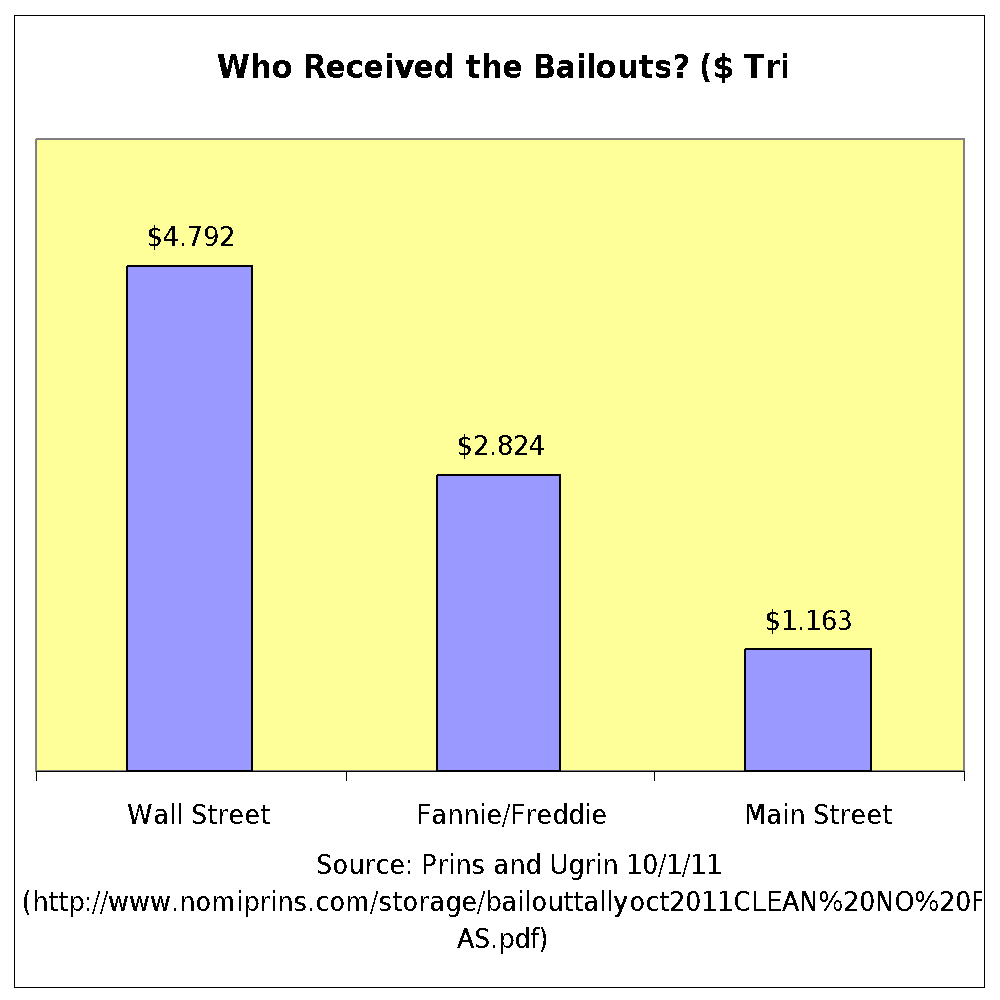
1. The bailouts went to Wall Street, not to Main Street.
 
The federal government and Federal Reserve poured trillions of dollars into Wall Street through a wide variety of financial maneuvers, many of which were hidden from view until recently. When we add it all up, it's clear that most of the money floated right into Wall Street. (Fannie and Freddie were private institutions that also considered themselves part of the Wall Street elite.)


2. Wall Street is Washington, Washington is Wall Street.
 
Those who shuttle back and forth between Washington and Wall Street designed the basic policies that both led to the crash and that responded to it. Hank Paulson, Bush's Secretary of the Treasury, served as chairman of Goldman Sachs before going to Washington. Timothy Geithner, Obama's Secretary of the Treasury, headed the regional Federal Reserve Board in New York (a board composed of Wall Street's Who's Who) before joining the Obama cabinet.
Countless government officials and congressional staffers can't wait to leave public service for lucrative jobs on Wall Street. Their collective mindset is that the world can't function properly unless the richest of the rich get richer. Any and all policies should therefore protect our biggest banks, rather than hinder them. And, of course, both parties are in hot pursuit of Wall Street campaign cash. Little wonder the so-called "recovery" transferred wealth from us to them.
 
3. The Federal Reserve banks on trickledown.
 
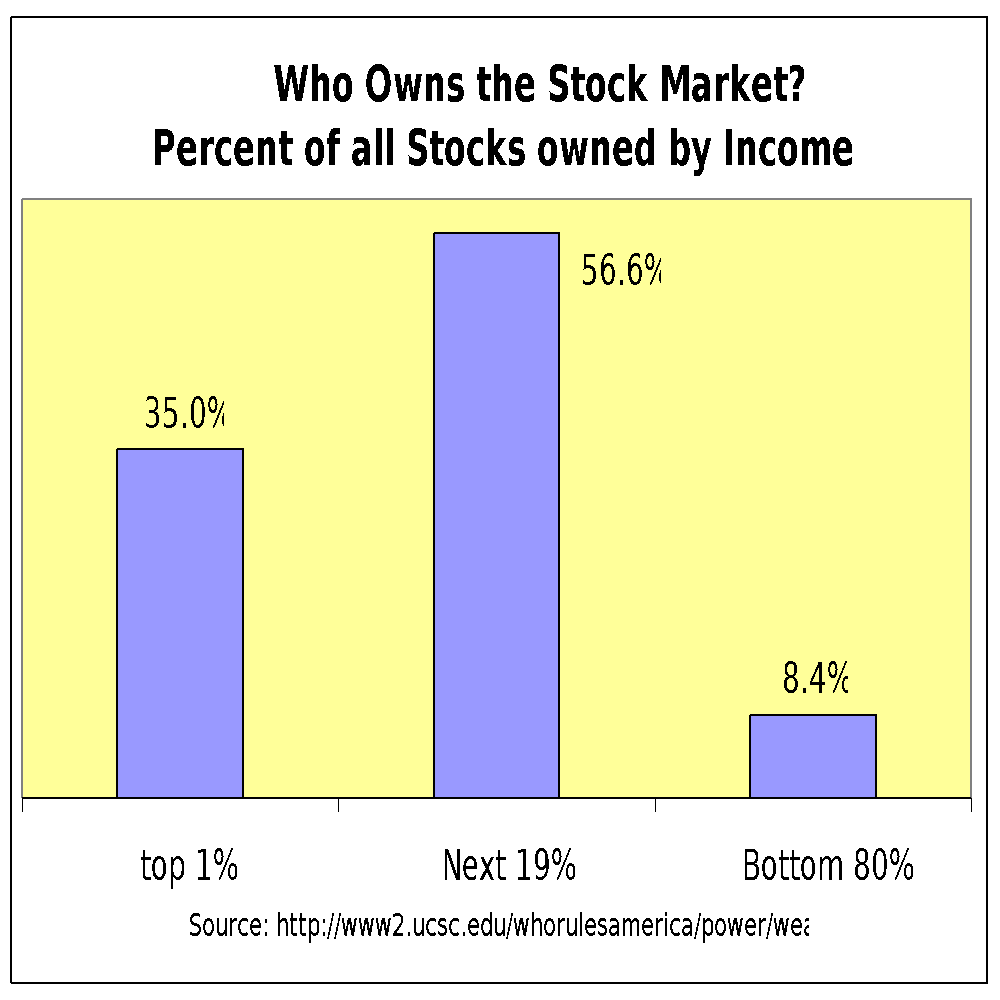
The Federal Reserve's ongoing stimulus policy comes down to this: The goal is to reduce interest rates on bonds of all kinds so that money flows into stocks. The more money that goes into the stock market, the higher go the stocks. Rising stock prices leads to what economists call the wealth effect -- those who see their stocks rise dramatically feel richer and spend more. That's supposed to trickle down to the rest of us: The rich spend more, businesses recover and then, maybe, hire more people. It's working beautifully for the super-rich but obviously not for the rest of us.
But wait, don't most of us own stocks either directly or through our pension funds and 401ks? Dream on, says this chart:


4. Washington fails to create enough jobs.
 
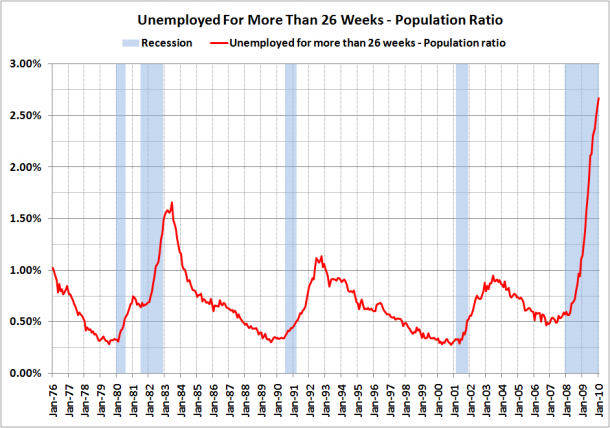
Wall Street's gambling spree tore a gaping hole to our economy. In a matter of months more than 8 million workers lost their jobs due to no fault of their own. What these elite financiers did to us is unconscionable, and they haven't had to pay a dime for the damage they caused. Although the stimulus programs prevented the slide from deepening, it was far too small to put America back to work. So now we're facing the highest levels of sustained unemployment since the Great Depression. The biggest victims of Wall Street greed are the long-term unemployed.


5. Government goes on a job-killing spree.
 
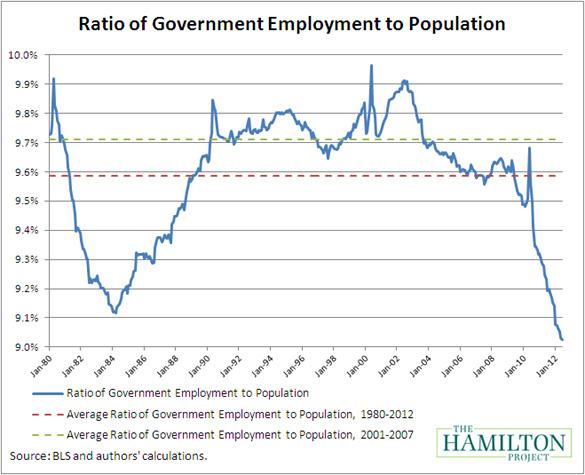
After Wall Street crashed the economy, businesses failed, workers lost their jobs and state and local tax revenues collapsed. In a just world, Wall Street would have been taxed to make up the difference. Instead, public employment was slashed. This further cut back on consumer demand, reduced tax revenues and then created pressure for another round of government job cuts. Of course, the Tea Party right loves the idea of crushing government jobs and public employee unions as well. But the main result is to increase unemployment, which in turn puts downward pressure on wages and increases profits for the wealthy.
 
As Michael Greenstone and Adam Looney point out ("A Record Decline in Government Jobs: Implications for the Economy and America's Workforce" [5]), "we are in unchartered territory when it comes to government employment." The chart below from their Brookings article shows that among the major state and local job categories, only firefighters saw an increase.
 

Occupation
Employment (2009)
Employment (2011)
Change in Employment
Percent Change in Employment
Teachers
3,942,700
3,721,938
-220,762
-5.6%
Policemen
666,579
610,427
-56,125
-8.4%
Fire fighters
233,051
277,158
44,107
18.9%
Emergency responders
69,370
39,170
-30,200
-43.5%
Air-traffic controllers
23,959
17,128
-6,831
-28.5%

Overall, the combination of state, local and foolish federal cutbacks are collapsing public employment like never before. And again, whenever unemployment increases, it places downward pressure on the wages and reduces the wealth of the many, while the few are enriched.


6. The big banks have become even bigger criminal conspiracies.
 
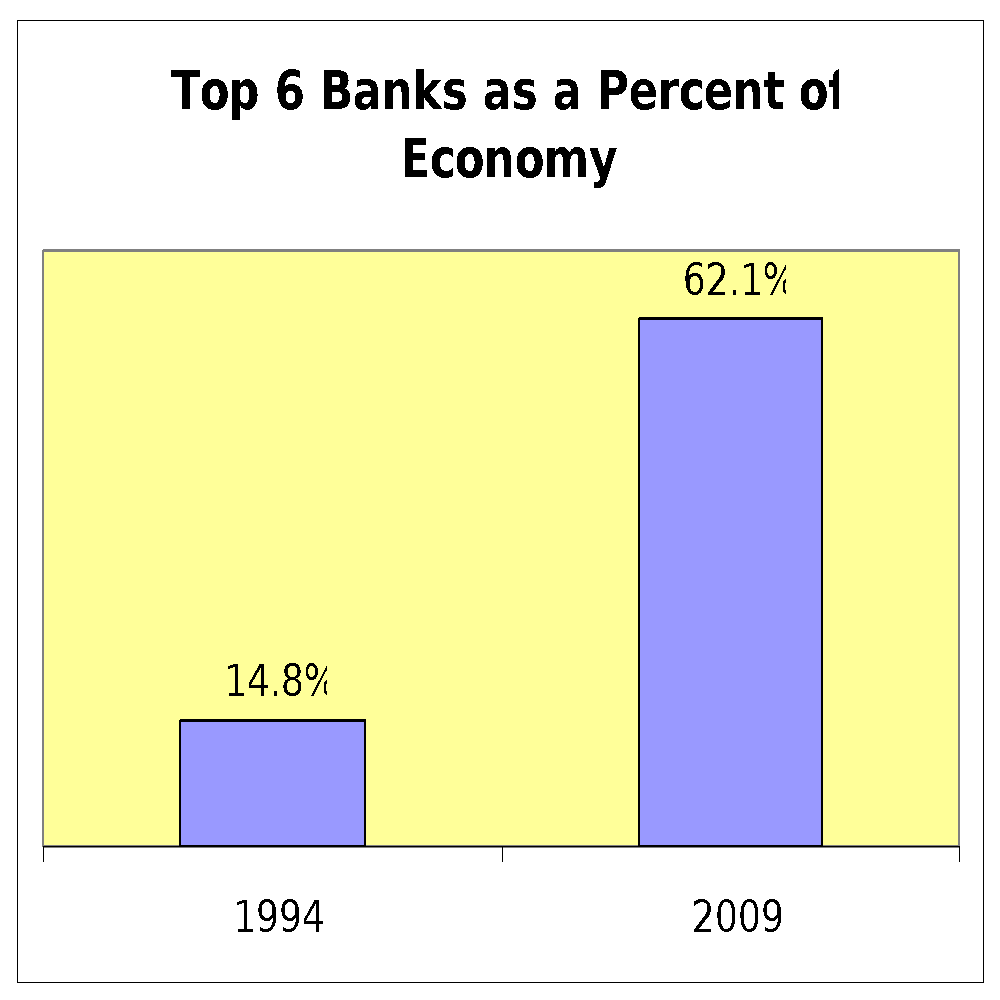
Not only did we bail out too-big-to fail banks with public money and get nothing back in return, but Washington allowed them to grow even bigger. The biggest banks now have oligopoly power to rig prices. They also can illegally collude in order to siphon off more wealth from the rest of us. (For some juicy details, see Matt Taibbi's "Everything is Rigged: The Biggest Price-Fixing Scandal Ever." [6] ) The corruption and cheating are reaching epic proportions as they gamble with insured deposit money, partner with loan sharks, money launder for drug cartels, and foreclose on homeowners who are up-to-date on their payments. All of that dirty money goes to the rich. (See "Are Big Banks Organized Criminal Conspiracies?" [7])


7. Hedge funds run wild.
 
 
In 2012, the top hedge fund manager "earned" in one hour as much as the average family makes in 21 years. The top 10 hedge fund managers made as much in one year as 196,000 registered nurses. What exactly do these hedge fund honchos do? Much of it comes from what normal people call cheating -- some of it legal, some of it borderline, and much of it criminal. But they're hard to catch. They profit from illegal insider tips, highfrequency trading, rumor-mongering, front-running trades, special tax loopholes and even by creating financial products that are designed to fail so that they can collect the insurance. They have their hands in our pockets 24/7. (See "America's New Math: 1 Wall Street Hour = 21 Years of Hard Work For the Rest of Us." [9])
 
 
8. The rise of the Ayn Rand Right.
 
The Tea Party brought a new viciousness to the national dialogue. Not only do they hate the government, but also, they hate the poor. Using the twisted logic of Ayn Rand, they see the world divided into winners and losers -- and screw the losers. Not only do they oppose social programs like Social Security and Medicare, they also don't believe that government should work on behalf of the collective good. In fact, they see any and all collective efforts as an affront to personal liberty. They want a world where the creators rule and the moochers suffer. They would rather the rich rob us blind, than have the government try to stop the financial cheating and deception. If Wall Street destroys your job -- too bad. Go get another one and don't expect the government to help.
 
9. The silencing of Occupy Wall Street.
 
For a few short months, the hundreds of Occupy Wall Street encampments dramatically shifted the national debate. Wall Street was in the crosshairs and "We are the 99 percent" spread into our consciousness. It's still there, but Occupy Wall Street isn't...at least not in the potent form that shook the rich and powerful. We don't have time here to discuss whether it was silenced by repressive authorities, or if it primarily caved in due to internal weaknesses in strategy and tactics. But this much is certain: a mass movement to take on Wall Street makes a difference.
 
***

The solutions are simple, but the fight is hard.

The Robin Hood Tax
The best way to move money from Wall Street to Main street is through a financial transaction tax -- a small charge on each and every sale of stocks, bonds and derivatives of all kinds. Consider it a sin tax on Wall Street's many vices. Such a tax could raise enough money so that every student in this country could go to a two- or four-year public college or university, tuition-free Just think what the elimination of increasing student debt would do to the lopsided wealth statistics. Just think of what that would do for jobs as colleges expanded to deal with the demand. It's not a wild-eyed demand: 11 countries are about to adopt such a tax. (See robinhoodtax.org [10])

Public State Banks

A second critical strategy to end Wall Street as we know it is to form 50 public state banks on the model of the Bank of North Dakota. These would function as real banks rather than the rigged casinos that pass for banks on Wall Street. State banks are designed to support community banks that, in turn, lend to local businesses. Most importantly, the public bankers would be paid reasonable salaries rather than gouging themselves at the trough. (See "Why is Socialism doing so darn well in Deep Red North Dakota?" [11])

The Public Banking Institute [12] is paving the way as its leaders (Ellen Brown and Marc Armstrong) help some 20 states explore the idea. They need and deserve our support. And for all you Fed haters, they also are formulating some very cool ideas about how to dramatically transform our central bank. (More on that in a future piece.) Most importantly, we all need to find a common way to protest Wall Street's rule over the economy and over Washington. This isn't about redistributing their wealth. It's about getting ours back.